For a lot of people, the hardest part of starting addiction treatment is not the first phone call or even the assessment. It is the idea of group. Sitting in a room with people you do not know, maybe people you will see later at the grocery store in Redmond or on the trail outside Bend, and talking about the thing you have worked hardest to keep private. If that thought makes your stomach drop, you are in good company. It is one of the most common worries people bring to their first appointment.
This guide is meant to take some of the mystery out of it. It covers what group counseling in outpatient addiction treatment actually is, why it is used so widely, what a group session tends to look like, and what you can expect if you start treatment here in Central Oregon. You do not have to be ready to join a group to read it.
Why So Many People Never Get This Far
Before getting into what group is like, it helps to remember how big a step it is to be considering treatment at all. According to the federal government's 2024 National Survey on Drug Use and Health, about 48.4 million people aged 12 or older had a substance use disorder in the past year, and only 12.3 percent of them, about 5.9 million people, received substance use treatment in that time.
There are many reasons for that gap: cost, distance, not knowing where to start, and worry about being judged are all part of it. Fear of the unknown is part of it too, and group counseling is one of the most unknown parts of treatment for someone who has never done it. Knowing what to expect will not make the first session effortless, but it can make it a lot less scary.
What Group Counseling Actually Is
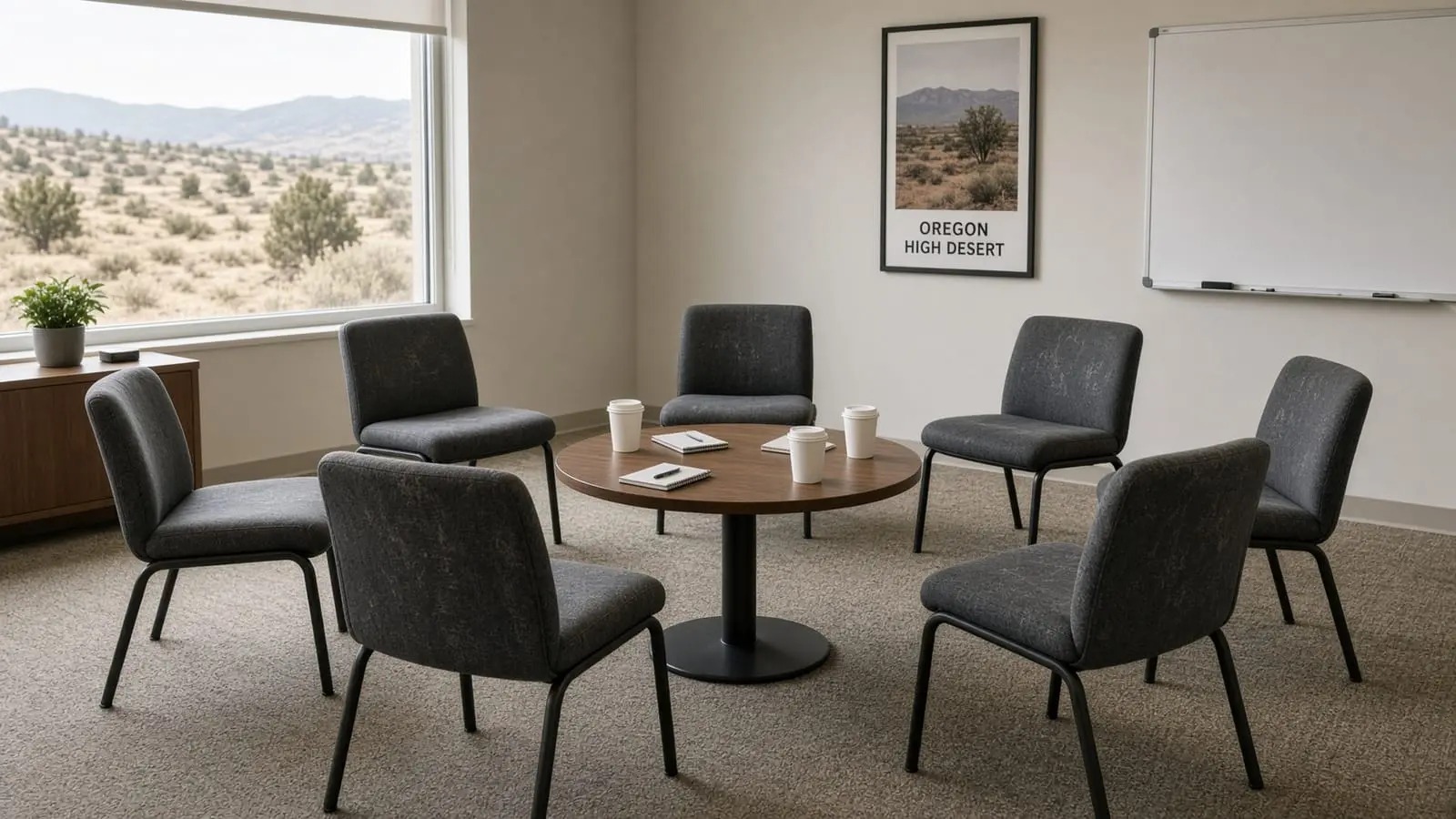
Group counseling in addiction treatment is not a support meeting you drop into, and it is not a room where people are put on the spot. It is a counseling session led by a trained professional, with a small number of people who are all working on their own recovery.
The Substance Abuse and Mental Health Services Administration (SAMHSA) wrote the field's standard guide on the subject, Treatment Improvement Protocol 41, Substance Abuse Treatment: Group Therapy. It limits the term to groups that have trained leaders and are meant to produce some kind of healing or recovery. It also notes that group therapy is popular in substance use treatment because it is both effective and economical, since several people can be helped at the same time.
At Rock Recovery, group counseling is one part of outpatient substance use disorder treatment, alongside individual and family counseling, all built around the plan you and your counselor put together after your assessment.
The Different Kinds of Groups
Not every group works the same way. SAMHSA's guide describes five common models used in substance use treatment:
- Psychoeducational groups. These are structured, often following a set curriculum, and focus on learning: how substance use affects the brain and body, what cravings are, and what recovery involves.
- Skills development groups. These practice the practical skills that make change possible, like handling stress, saying no, or getting through a hard evening without using.
- Cognitive behavioral groups. These look at the thought patterns and habits that keep substance use going, and work on new ways of thinking and responding.
- Support groups. These give members a place to be honest with each other, call out each other's excuses kindly, and back each other's progress.
- Interpersonal process groups. These use the relationships inside the group to understand relationship patterns outside it. SAMHSA notes they are less common because they take extensive leader training and a long commitment.
Many treatment groups blend more than one of these. A single session might start with a short topic, move into practicing a skill, and end with people talking about how their week went.
Why Group Helps
It is fair to wonder why treatment would put you in a room with other people instead of just one-on-one with a counselor. SAMHSA's guide points to several reasons group works for many people with substance use disorders:
- It breaks the isolation. Substance use often pulls people away from others. Group reminds you that you are not the only one, and that alone can take some of the weight off.
- It reduces shame. Hearing someone else describe the exact thing you thought only you had done can loosen shame faster than almost anything else. SAMHSA notes that groups help with problems that often come with addiction, such as depression, isolation, and shame.
- It brings positive peer support. The guide describes groups as offering positive peer support and positive pressure to stay away from substances. It is one thing to hear advice from a counselor. It is another to hear it from someone three months further down the same road.
- It builds real-world skills. Groups are a safe place to practice talking honestly, setting boundaries, and asking for help, which are the same skills recovery depends on outside the room.
- It offers many perspectives at once. Several people bring several ways of handling the same problem, which gives you more options than any one person could.
What a Group Session Is Usually Like
Every group is a little different, but there are some things you can generally expect:
- A counselor leads. The group is guided by a trained professional who keeps things on track, makes sure the conversation stays respectful, and makes room for quieter members.
- You do not have to share right away. Listening is a real way to take part, especially early on. Many people say very little in their first sessions and open up as they get comfortable.
- Privacy is part of the agreement. Most treatment groups start with the expectation that what members share stays in the room. Separately, federal rules known as 42 CFR Part 2 give substance use treatment records strong confidentiality protections.
- The focus is on now. Groups tend to spend their time on what is happening in your life this week, what is getting in the way, and what is helping, rather than on retelling the worst moments of your past.
- It is not confrontational. Older stereotypes of treatment groups as places where people are torn down do not describe good care. The aim is honesty with support, not humiliation.
If something about group feels hard, say so. Your counselor can talk with you about it in individual sessions, and that conversation is often useful in its own right.
Group and Individual Counseling Work Together
Group is rarely the whole picture. In outpatient treatment it usually sits alongside individual counseling, where you can go deeper into the parts of your story you are not ready to share with others, and where your counselor can adjust your plan. Peer support adds another layer. Rock Recovery's certified recovery mentors have walked this road themselves, and our post on how peer support works in Central Oregon explains what that looks like.
Together, those pieces help build the habits and supports that carry you past treatment. Our guide to relapse prevention in Central Oregon walks through how that planning works in daily life.
Fitting Group Into a Central Oregon Life
People in outpatient treatment are usually still working, parenting, and living at home. Group sessions are part of a schedule built around that life, not a replacement for it. If you are wondering how treatment fits around a job, our post on keeping your job in outpatient treatment covers it in detail.
Rock Recovery is an Oregon Health Authority-licensed outpatient treatment provider (Certificate of Approval #001776) in Redmond, serving people from Bend, Prineville, Madras, Sisters, La Pine, Terrebonne, and across Central Oregon. Shawn and Eugene Reece, who lead Rock Recovery, are both in recovery themselves, and many of our staff bring lived experience. That shapes how groups feel here: people who understand, not people who judge.
We accept the Oregon Health Plan, Medicare, and most private insurance. You can read more about how OHP covers addiction treatment or visit our insurance page.
Frequently Asked Questions
Do I have to talk in group?
You do not have to share right away. Listening is a real way to take part, especially early on, and many people say very little in their first sessions and open up as they get comfortable.
What if I know someone in my group?
In a smaller community that can happen. Tell your counselor, and they can talk through it with you. Most treatment groups start with the expectation that what members share stays in the room.
Is group counseling the same as a 12-step meeting?
No. Group counseling in treatment is led by a trained professional and is part of a treatment plan. SAMHSA's guide on group therapy limits the term to groups that have trained leaders and are meant to produce healing or recovery.
Why does treatment use groups instead of only one-on-one sessions?
SAMHSA notes that group therapy is popular in substance use treatment because it is both effective and economical, and that groups offer positive peer support and help with problems that often come with addiction, such as depression, isolation, and shame. In outpatient treatment, group usually sits alongside individual counseling rather than replacing it.
What should I do if group makes me anxious?
Say so. Your counselor can talk with you about it in individual sessions, and that conversation is often useful in its own right.
Does insurance cover group counseling?
Rock Recovery accepts the Oregon Health Plan, Medicare, and most private insurance. Our team can check your benefits before your first appointment so you know what to expect.
One Plan. One Team. The Whole Way Through.
Walking into a group for the first time takes courage, and you do not have to figure it out alone. At Rock Recovery, your assessment, individual counseling, groups, and peer support are all part of one plan with one team, so you always know who to talk to and what comes next. If you are curious what the very first visit is like, start with our walkthrough of what to expect at your first outpatient appointment.
When you are ready, or even if you just have questions, reach out through our contact form or call us at (541) 234-3081. We will meet you where you are.