Central Oregon is home to a lot of people who have served. You see them coaching Little League in Redmond, running crews in Bend, ranching outside Prineville, and quietly showing up for their neighbors in every small town in between. Many came home and built good lives. Some came home carrying something heavier, and found that a few drinks, a pill, or something else made it easier to sleep, to stop the replay, or just to feel normal around people who had not been where they had been.
If that is you, or someone you love, this guide is for you. It covers how common substance use problems are among veterans, why service can make them more likely, the signs worth paying attention to, and how outpatient treatment and peer support can help here in Central Oregon. You do not need to have decided anything to keep reading.
You Are Not the Only One
Asking for help can feel like the opposite of everything the military trained into you. Handle it. Do not be a burden. Take care of your people first. Those are good instincts in the field. They can get in the way at home.
It may help to know how many veterans face the same thing. A Substance Abuse and Mental Health Services Administration analysis of national survey data found that about 1 in 15 veterans had a substance use disorder in the past year. The rate varied a lot by era of service, from 3.7 percent among veterans who served before the Vietnam era to 12.7 percent among those who served after September 2001. Those figures come from 2013 survey data, but they make the point clearly: substance use problems are common among people who served, and especially among younger veterans.
Why Service and Substance Use Get Tangled Together
There is rarely one reason. More often several things stack up:
- Trauma and its aftermath. Combat, accidents, losing friends, and other hard experiences can leave nightmares, a short fuse, and a body that never quite stands down. Alcohol or drugs can quiet that for a night, and then make it louder over time.
- Pain and injuries. Many veterans live with chronic pain from training or deployment. For some, that started with a prescription and became something harder to control.
- Old habits. For some, heavy drinking was part of how people bonded and decompressed while serving. Patterns that felt normal in uniform can follow people home.
- The transition itself. Leaving the structure, mission, and people of the military can leave a gap. Sleep, purpose, and connection all take a hit at once.
- Not wanting to burden anyone. Many veterans would rather manage alone than worry their family or admit they are struggling.
Trauma, PTSD, and Substance Use
The VA's National Center for PTSD notes that PTSD and substance use problems are strongly related in both military and civilian groups. That makes sense. When your nervous system is stuck on high alert, anything that turns the volume down can feel like relief. Over time, though, substances tend to make sleep worse, mood lower, and the trauma symptoms harder to manage.
That is why care that treats only one side of the problem often falls short. At Rock Recovery, co-occurring concerns like trauma, anxiety, and depression are addressed as part of substance use treatment, with the same team, rather than through a separate referral. Our dual diagnosis care is built for that overlap, and our guide to trauma, PTSD, and substance use goes deeper on how the two feed each other.
Signs It Has Become a Problem
Every person's story is different, but these patterns are worth paying attention to, whether you see them in yourself or in a veteran you love:
- Drinking or using to sleep. Needing something every night to get to sleep, or to stop the dreams.
- Using more than you planned. A couple of beers turning into the whole case, more often than not.
- Losing your temper more easily. Irritability, arguments, or anger that seems bigger than the moment.
- Pulling away. Skipping family time, avoiding old friends, or spending more time alone with a drink.
- Taking risks. Driving after drinking, mixing alcohol with medications, or doing things you would not do sober.
- Trying to cut back and not managing it. Making rules for yourself and watching them fall apart.
None of these mean you are weak or broken. They mean something needs attention, and that help is worth asking for.
What Outpatient Treatment Can Look Like
For many veterans, outpatient treatment is a good fit because it works around work, family, and life rather than taking you out of it. In practice, it usually includes:
- An honest assessment. A counselor learns about your use, your health, your service and what came after, and what you want, so the plan fits you.
- Individual counseling. Space to understand what substances have been doing for you, and to build other ways of handling stress, sleep, and the hard memories.
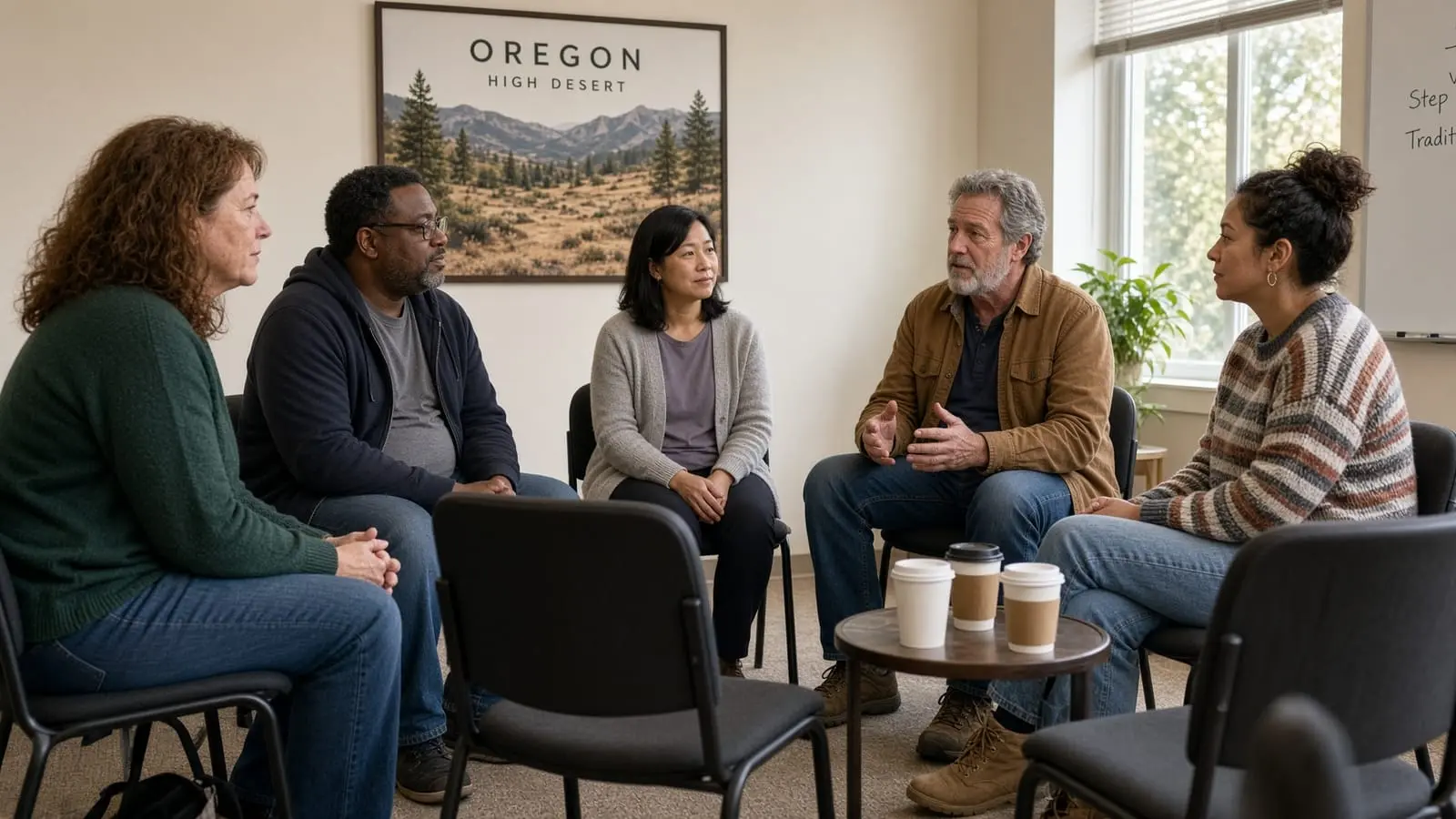
- Group counseling. Many veterans find it easier to talk in a room of people working on the same thing. It can take a lot of the isolation out of it.
- Peer support. Certified recovery mentors who have walked this road themselves and can help with the everyday parts of change.
- Care for what is underneath. Trauma, anxiety, and depression are addressed as part of the same plan.
If you are wondering how to start that first conversation, our guide on how to ask for addiction help walks through what to say when you call.
Why Peer Support Fits So Many Veterans
In the military, you trusted the people who had been there with you. That instinct does not go away, and it can be one of the most powerful tools in recovery. Talking with someone who has lived through their own substance use, and come out the other side, can make it easier to be honest and to stick with it.
Rock Recovery's certified recovery mentors are people in their own recovery who are trained to support others. They are not a replacement for counseling. They are a different kind of support, the kind that says "I have been there too." Our post on what a certified recovery mentor does explains how it works.
If You Are in Crisis Right Now
If you are thinking about hurting yourself, or someone is in immediate danger, call 911. Veterans and their families can reach the Veterans Crisis Line any time by dialing 988 and then pressing 1, or by texting 838255. You do not have to be enrolled in VA benefits or health care to use it.
How Rock Recovery Helps in Central Oregon
Rock Recovery is an Oregon Health Authority-licensed outpatient treatment provider (Certificate of Approval #001776) at 1243 SW Highland Ave, Suite C in Redmond, serving Bend, Prineville, Madras, Sisters, La Pine, Terrebonne, and the rest of Central Oregon. Our outpatient substance use disorder treatment is delivered at ASAM Level 1, with individual and group counseling, peer support from certified recovery mentors, and care for co-occurring mental health concerns within the same plan. For people whose faith matters to their recovery, our voluntary Redeemed Recovery track brings Christian discipleship together with clinical care.
Shawn and Eugene Reece, who lead Rock Recovery, are both in recovery themselves, and many of our staff bring lived experience. We know how hard it is to ask for help when you are used to being the one others lean on. You will be treated with respect here. We work with most major insurance plans, including Medicare. If your coverage is through the VA or TRICARE, tell us when you call so we can check what applies to your situation.
Frequently Asked Questions
How common are substance use problems among veterans?
A SAMHSA analysis of 2013 national survey data found that about 1 in 15 veterans had a substance use disorder in the past year. The rate was highest, 12.7 percent, among veterans who served after September 2001.
Are PTSD and substance use connected?
Yes. The VA's National Center for PTSD notes that PTSD and substance use problems are strongly related in both military and civilian groups. Treating both together, rather than one at a time, often makes sense.
Do I have to go through the VA to get help?
No. You can contact Rock Recovery directly. If your coverage is through the VA or TRICARE, tell us when you call so we can check what applies to your situation.
Can I keep working while I get treatment?
For most people, yes. Outpatient treatment is designed to fit around work and family, so you can keep your routine while you get support.
What if I am in crisis?
Call 911 if anyone is in immediate danger. Veterans and their families can reach the Veterans Crisis Line any time by dialing 988 and pressing 1, or by texting 838255.
One Plan. One Team. The Whole Way Through.
You took care of others for a long time. Letting someone help you is not a failure of strength. Rock Recovery brings assessment, counseling, peer support, and care for what is underneath together under one team, so you are never handed off or left to start over.
Whether you are reaching out for yourself or for a veteran you love, contact us through our contact form or call us at (541) 234-3081. We will meet you where you are.