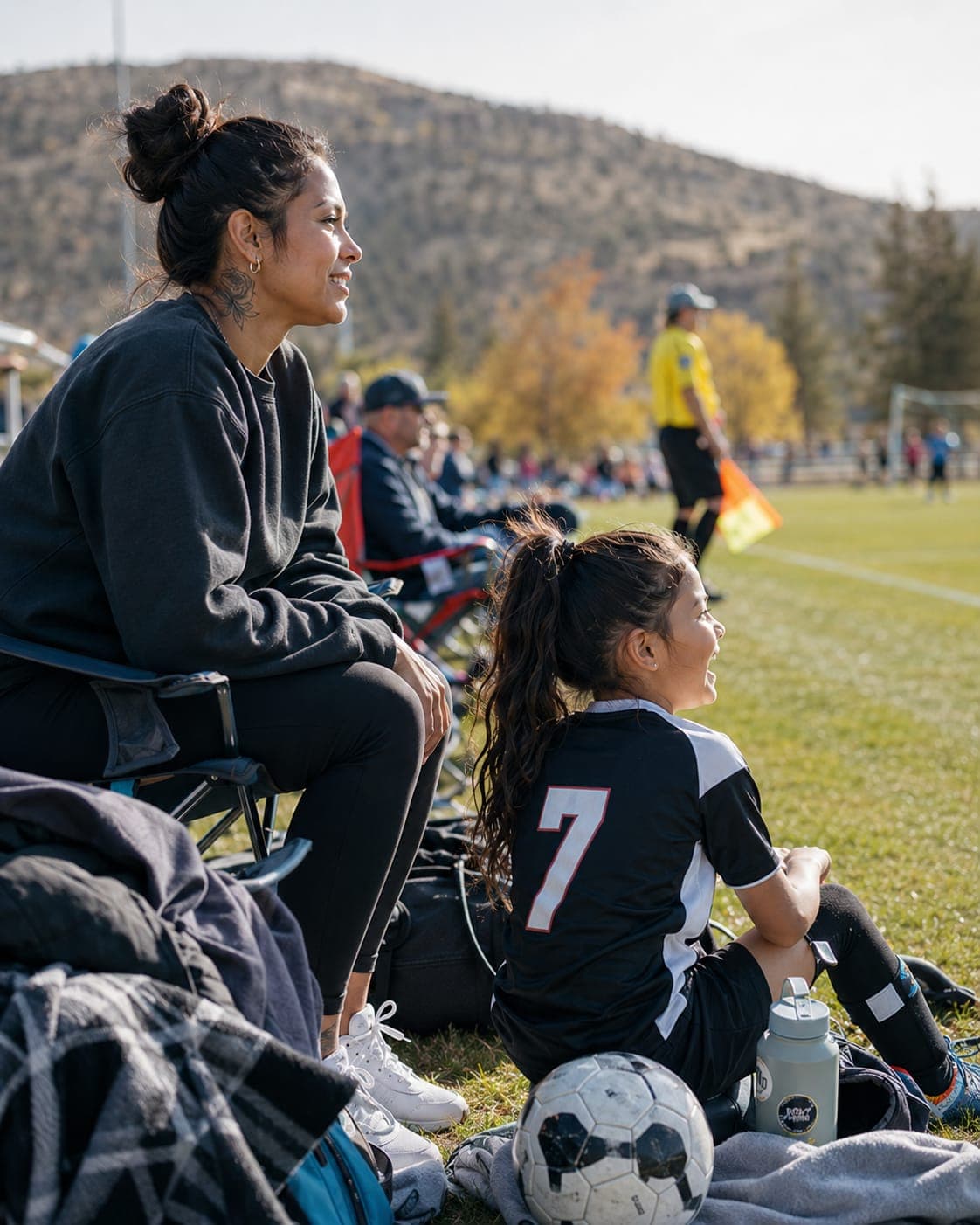
Slammed doors. One-word answers at dinner. A kid who used to tell you everything and now tells you nothing. If the relationship with your teenager has turned into a string of arguments, silence, or both, you're not imagining that something has shifted, and you're far from the only Central Oregon parent lying awake wondering how to fix it.
Some friction between parents and teenagers is a normal, even healthy, part of a teen learning to become their own person. But when conflict becomes the default setting in your house, when every conversation is a negotiation or a blowup, and connection feels like a memory, that's a sign the family could use outside support, not a sign you've failed as a parent. Family therapy for parent-teen conflict is one of the most effective, well-studied ways to interrupt that pattern. Here's what it actually involves, how to tell it's time, and how to find it in Central Oregon.
Why Parent-Teen Conflict Escalates the Way It Does
Adolescence is a period of rapid brain development, identity formation, and a biological push toward independence, all happening at the same time a teen is navigating school pressure, social media, friendships, and (for many) their first real experiences with anxiety or low mood. Parents, meanwhile, are often managing their own stress while trying to hold onto rules and closeness that suddenly feel harder to maintain. Both sides are usually doing their best with incomplete information about what the other is going through, and that gap is where conflict lives.
The stakes of leaving that gap unaddressed are real. According to the CDC's Youth Risk Behavior Survey, roughly 4 in 10 high school students (40%) reported persistent feelings of sadness or hopelessness in the most recent national data, and the same CDC research identifies feeling connected to family as one of the strongest protective factors against that decline. In other words, the quality of the relationship at home isn't a side issue to a teen's mental health. It's one of the biggest levers parents have.
The encouraging part: connection can be rebuilt. It usually just needs a structured, neutral space to happen in, which is exactly what family therapy provides.
Signs the Conflict at Home Has Moved Past "Normal Teenage Stuff"
Every family fights sometimes. These are the signs the pattern has become something that benefits from professional support rather than something that will simply pass with time.
- Communication has gone silent. Your teen has stopped sharing anything real with you, answers in single words, or actively avoids being in the same room.
- Every conversation turns into a fight. Even neutral topics, homework, chores, weekend plans, reliably end in raised voices or someone walking away.
- Grades, sleep, or friendships are slipping. The conflict at home is showing up as a drop in functioning elsewhere, which often signals stress the family system isn't currently able to absorb or resolve.
- Your teen is pulling away from the family entirely. They're spending as little time at home as possible, or seem to be building an identity that excludes the rest of the household on purpose.
- You're starting to wonder about substance use. Secrecy, mood swings, or a sudden change in friend group is prompting questions you don't know how to ask, or answers you're afraid to get.
- You've stopped trying because nothing works. You've tried the consequences, the conversations, the ultimatums, and you're exhausted and out of ideas, which is one of the clearest signals it's time to bring in outside support.
If you're managing your own stress and burnout on top of the conflict at home, that's worth naming too. Parents run out of bandwidth just like anyone else. Our guide to stress and burnout counseling in Central Oregon covers what that looks like and how counseling helps.
What Family Therapy for Parent-Teen Conflict Actually Looks Like
Family therapy isn't a lecture, a mediation, or a place where a counselor decides who's "right." It's a structured process, usually rooted in family systems therapy, built on the idea that conflict lives in patterns, how the family communicates, who escalates first, what gets avoided, rather than in any one person being the problem.
In practice, that typically includes a mix of formats:
- Sessions with the whole family together. A licensed therapist facilitates conversations that would usually spiral at home, teaching both parents and teens how to state a need without triggering a fight.
- Individual time with the teen. Teens often open up more honestly one-on-one, and that space helps the therapist understand what's actually driving the withdrawal or the anger.
- Individual or parent-focused time with caregivers. Parents get their own space to process frustration, get grounded guidance on boundaries and consistency, and understand adolescent development without judgment.
- Concrete communication tools. Families leave sessions with specific language and structure to use at home, not vague encouragement to "communicate better."
This kind of family-centered approach is consistent with guidance from the Substance Abuse and Mental Health Services Administration, which emphasizes that involving the whole family, not just the individual child, produces better and more durable outcomes in youth mental health care. And it matters that families actually get to this step: national data from NAMI shows that while more than 1 in 7 youth ages 6 to 17 experience a mental health disorder in a given year, only about half receive any treatment at all. A lot of that gap isn't lack of concern. It's not knowing where to start, or assuming things have to get worse before they qualify for help. They don't.
How This Differs From "Just Sending My Teen to Therapy Alone"
Individual therapy for a teenager is valuable and sometimes exactly the right fit, particularly if a teen needs private space to work through something specific, like anxiety or a difficult friendship. But when the presenting problem is the relationship itself, treating only the teen leaves half the system unchanged. A teen can learn new coping skills in an individual session and walk right back into the same household dynamic that triggered the conflict in the first place.
Family therapy treats the relationship as the client, not just the teenager. That's often the difference between a household where the fighting quiets down for a few weeks and one where the underlying pattern actually shifts.
When Substance Use Is Part of the Picture
Sometimes what looks like ordinary teenage friction is tangled up with something else: a teen experimenting with alcohol, vaping, or other substances, using them to manage stress or distance themselves from a tense household. If that's part of what's happening in your family, it changes the conversation, but it doesn't mean you need to find a completely separate provider for that piece.
Rock Recovery's team works with families navigating exactly this overlap, including through our early intervention track for people whose use hasn't reached the level of a diagnosable disorder but is already worth addressing. If you're not sure how to even start that conversation with your teen, our guide on how to talk to a loved one about their addiction walks through language and boundary-setting that applies to parent-teen conversations as well as adult family relationships.
What to Expect From Your First Family Session at Rock Recovery
Rock Recovery (operating as Reece Counseling Inc.) is licensed by the Oregon Health Authority under Certificate of Approval #001776, and our team includes licensed clinicians experienced in family work. Many of our staff, including our leadership, bring lived recovery experience to their work with families, which means judgment isn't part of how we approach a household in conflict, whether or not substance use is involved.
Your first session focuses on understanding the whole picture: what's happening at home, what's already been tried, and what each family member needs from therapy going forward. From there, your therapist builds a plan tailored to your family rather than a generic template. If you're unsure what credentials or logistics to look for in a therapist before you even book that first appointment, our guide to choosing a therapist in Central Oregon is a useful starting point. And if conflict with a co-parent or partner is tangled up in the family dynamic, our page on couples counseling in Central Oregon covers when that's worth pursuing alongside family sessions.
Rock Recovery accepts the Oregon Health Plan (OHP), Medicare, and most private insurance, and serves families throughout Redmond, Bend, Prineville, Madras, Sisters, and the rest of Central Oregon. Our page for families covers what support looks like for the parents and siblings around the person in treatment.
Frequently Asked Questions
Does my teen have to want to go to therapy for it to work?
It helps, but reluctance is extremely common and not a dealbreaker. Skilled family therapists are experienced at engaging teens who show up skeptical or resistant, and the first session or two is often about building enough trust that the teen is willing to participate honestly. Forcing enthusiasm isn't the goal. Showing up consistently is.
What's the difference between family therapy and just taking my teen to their own counselor?
Individual therapy focuses on the teen's internal experience one-on-one. Family therapy focuses on the relationship and communication patterns between family members, with sessions that may include the whole family, the teen alone, and parents alone. Many families benefit from a combination of both, depending on what's driving the conflict.
Will the therapist take my side or my teen's side?
Neither. A family therapist's role is to help the family system communicate more effectively, not to assign blame or declare a winner. Most parents find that having a neutral facilitator in the room actually makes it easier to hear their teen's perspective without it turning into another argument.
How long does family therapy for parent-teen conflict usually take?
It varies by family, but many families begin noticing shifts in communication within the first several sessions, with a fuller course of treatment often running several months. Your therapist will talk with you about a realistic timeline and check in on progress along the way rather than leaving it open-ended.
Does insurance cover family therapy in Oregon?
Rock Recovery accepts the Oregon Health Plan (OHP), Medicare, and most private insurance plans for mental health counseling, which includes family therapy. Coverage details vary by plan, and our team can help verify your specific benefits before your first appointment.
What if I suspect my teen's conflict with me is connected to drinking or drug use?
Say so when you reach out. Rock Recovery's team can address both the family relationship and any substance use concerns under the same plan, which means you won't need a separate referral or a second intake process if that turns out to be part of what's going on.
One Plan. One Team. The Whole Way Through.
You don't have to have this figured out before you call. Rock Recovery matches your family with a licensed therapist experienced in family conflict, and if it turns out substance use is also part of the picture, the same coordinated team can address that too, with no re-referral and no starting over with a new provider. Reach out to Rock Recovery today to schedule your family's first appointment and start rebuilding the relationship with your teen.